How 300 million years become architecture.

INSIGHT: Bavarian Granite

How 300 million years become architecture.

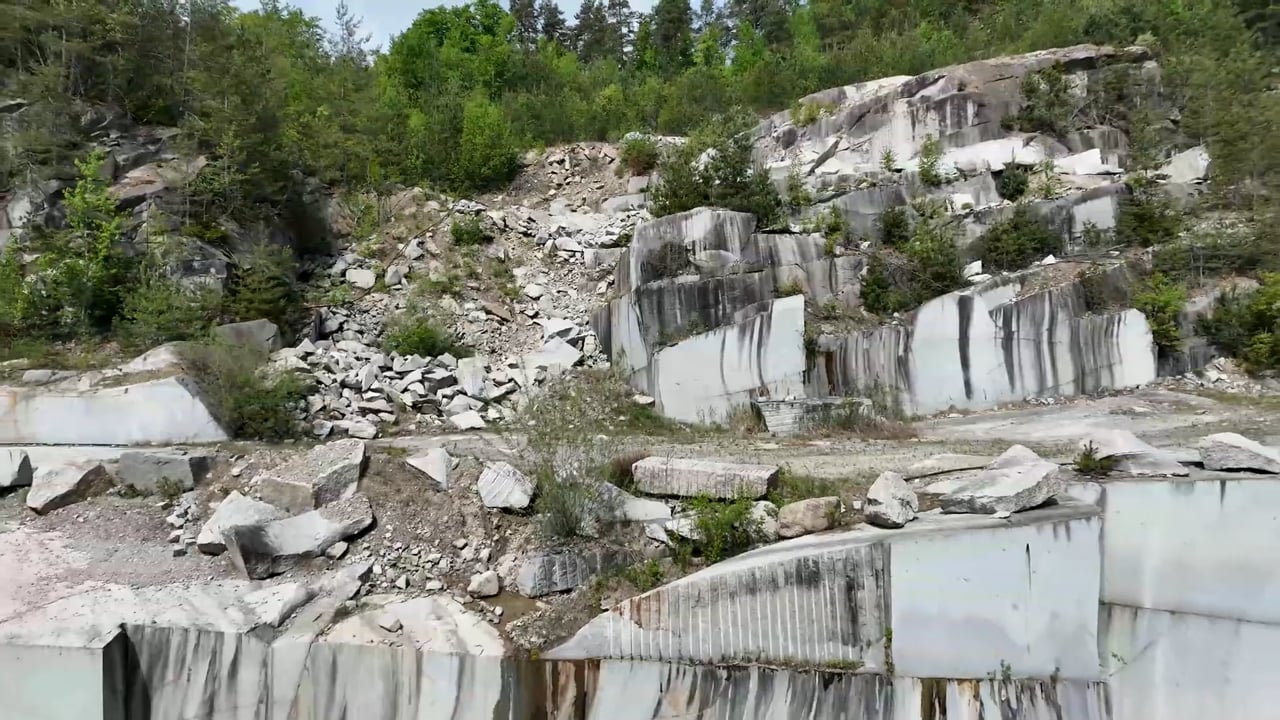
Granite carries time in a way few materials do. Formed deep within the earth, it can remain hidden for more than 300 million years before it is brought to the surface and shaped for a new purpose. At Kusser, this material connection is part of the company’s history. Our work with granite is rooted in our own quarries in the Bavarian Forest, where several of the stones used in our projects are extracted. From there, granite can take many forms: a fountain, an architectural element, a KUSSERPOOL® or a specially engineered object made from solid natural stone.

a view of granite wall in a quarry
a granite quarry
drone footage of a qaurry in the bavarian forest

Our Own Quarries

Quarrying has a long tradition in Bavaria. In the Bavarian Forest, granite has shaped landscapes, villages and craftsmanship for generations. Kusser is part of this tradition with its own quarries: Höhenberg for Tittlinger Fine-grained and Tittlinger Coarse-grained, Paradies for Fürstensteiner and Weishäupl, and Bauer Nammering for Nammeringer Yellow-Grey and Nammeringer Grey-Blue.

Granite is extracted in large raw blocks.

historical image of a stone masondrone footage of the quarry Höhenberga portrait of a quarry master

Before a block can leave the quarry, the stone has to be prepared, drilled and separated from the rock face with wire saws. It is then shaped into a transportable size, lifted out and moved to the production facilities. This work requires experience. The quarry team needs to understand the stone, the equipment and the right moment for each step. Every raw block carries the character of its quarry, and careful extraction is the first step towards a fountain, Kusserpool or bridge. If colors, structures or applications beyond our own deposits are needed, Kusser works with selected quarries around the world.

NATURAL STONE DATABASE

Find the natural stone for your requirements: Colours, textures, and technical data at a glance.

Explore
Fürstensteiner
Roblock Fürstensteiner Granit
Nammeringer Yellow-Grey
Nammeringer Gelbgrau Rohblock
Nammeringer Grey-Blue
Rohblock Nammeringer Blaugrau
Tittlinger Fine-Grained
Tittlinger fine grain quarry block
Tittlinger Coarse-Grained
Tittlinger course grain quarry block
Weishäupl
Rohblock Weishäupl Granit

From Quarry to Workshop

a worker at a horizontal saw

After extraction, raw blocks are brought to the Kusser production facilities. Machines and craftspeople shape the stone into precise components. Surfaces are finished, edges are worked and individual elements are prepared for their later use. The same material basis can lead to very different results. Granite from our quarries is used for fountains of all kinds, architectural stone, outdoor elements, custom-built objects and the KUSSERPOOL®. What connects them is the same origin: solid stone, carefully extracted and processed with experience.

Renaturation

natural plants taking over an abondend quarryreflecting water of a natural pondnatural pond in an abondend quarry

A quarry changes a landscape. That responsibility does not end with extraction. When a quarry is no longer active, nature gradually takes over again. Water areas, exposed rock faces, gravel zones and open ground can become valuable habitats for plants and animals. Over time, former extraction sites develop into places with their own ecological character. This gives the quarry a second life. What once provided stone for buildings, fountains and the Kusserpool® becomes part of the landscape again.

More INSIGHTS

Back to overview